" transform="translate(8 10)" width="8px"/></svg>)

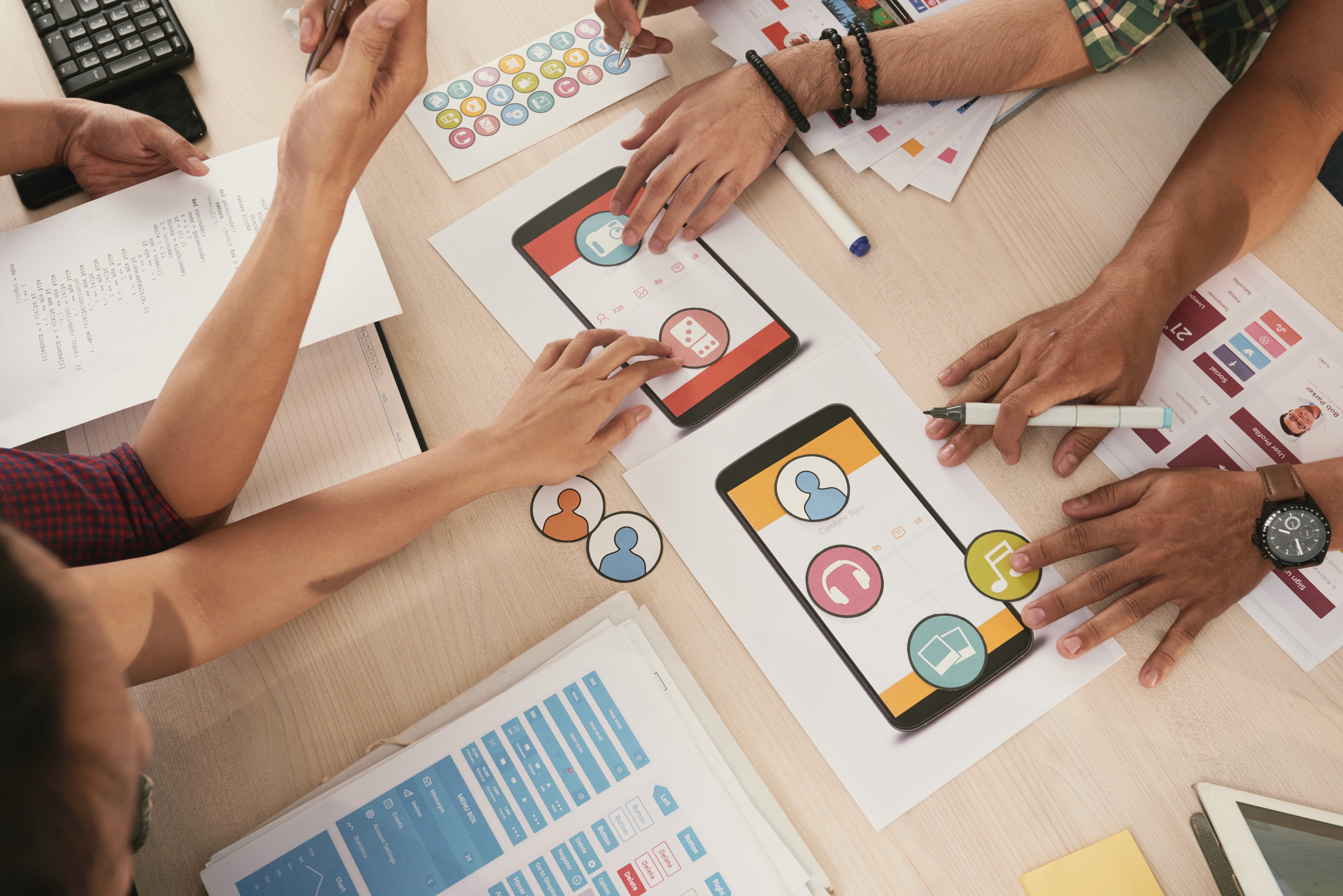
Short on time? Here’s the 30-second summary: True learning impact comes from moving beyond superficial points and badges toward a competency-based model that prioritizes mastery and intrinsic motivation. By integrating mobile-first microlearning with daily streaks, training becomes a seamless habit for the deskless workforce, shifting the focus from simple participation to measurable business outcomes like improved CSAT and operational efficiency.
Why Gamification Matters in Learning
Gamification has become a buzzword in corporate training, but too often it’s reduced to superficial mechanics: points, badges, and leaderboards. These tools may capture initial attention, but they rarely sustain motivation. Real learning impact comes when gamification is designed to emphasize progress, mastery, and growth. It’s not only about rewards.
Frontline employees, especially in retail, hospitality, and service sectors, face high workloads and limited time. Gamification helps integrate learning into their daily routines, but only if it’s purposeful.
The Limits of Points-Only Gamification
Short-Term Engagement: Points create spikes of activity but fade quickly if not tied to deeper meaning.
Reward Fatigue: If every action earns a badge, employees stop valuing them.
Competition Over Collaboration: Leaderboards can motivate some but discourage others, especially if gaps seem impossible to close.
Gamification should be more than “scorekeeping.” It must connect effort with real progress in knowledge and skills.
The Science of Progress: Behavioral Economics in Learning
Real impact happens when gamification is built on behavioral economics and nudge theory. Instead of just scorekeeping, effective systems use adaptive learning to keep employees in the flow zone, the sweet spot where the challenge perfectly matches their skill level.
1. Progression Systems & Competency-Based Education (CBE)
Levels and milestones shouldn't just be numbers; they should represent a journey toward mastery. When a learner "unlocks" a new level, they should feel they’ve gained a new capability, not just a higher score.
2. Meaningful Feedback Loops
AI-driven feedback transforms a "wrong answer" into a teaching moment. Immediate, constructive feedback is the cornerstone of asynchronous learning, allowing frontline staff to learn on the fly without a manager standing over them.
3. Habit Formation through Daily Streaks
Using nudge theory, small daily prompts encourage microlearning. When learning becomes a repeatable habit, knowledge retention skyrockets, directly impacting operational efficiency.
4. Narrative-Based Quests
By framing training as a "mission" or "role-based quest," you connect learning to the ROI of training. Employees see how their progress improves Customer Satisfaction (CSAT) and upsell conversion in real-time.
Measuring the Business Impact: Beyond Completion Rates
If you want to prove the ROI of training to stakeholders, you must look past simple completion rates. Look for:
Metric Category | Key Performance Indicators (KPIs) |
Engagement | Streak consistency, challenge attempts, mobile-first login frequency. |
Skill Growth | Scenario-based accuracy, reduction in operational errors. |
Business Outcomes | CSAT scores, upsell conversion, and employee retention rates. |
Avoiding the "Over-Gamification" Trap
More isn't always better. To avoid confusing your team, follow these rules:
Keep it Mobile-First: Frontline workers don't use desktops. If it isn't easy to do on a phone during a 5-minute break, it won't happen.
Focus on Practical Relevance: Adult learners need to know why this matters for their next shift.
Balance Competition with Collaboration: Use team-based quests to foster a culture of support rather than just individual rivalry.
FAQ: Gamification for Mastery
How can I design a gamification strategy that moves beyond simple points and leaderboards to drive true mastery?
To move beyond superficial mechanics, shift your focus from extrinsic rewards to competency-based education. Design a "Skill Tree" or progression path where leveling up is tied to unlocking new responsibilities or "pro" status within the app. By using narrative-based quests that mirror real-world challenges, you foster intrinsic motivation, making the sense of achievement the primary reward rather than just a digital badge.
What are the best ways to improve knowledge retention for a high-turnover deskless workforce?
The most effective method is mobile-first microlearning combined with spaced repetition. For the deskless workforce in retail or hospitality, training must be accessible in 3-minute bursts. Implementing daily streaks encourages consistent engagement, which triggers the brain to move information into long-term memory, significantly reducing the "forgetting curve" common in high-pressure environments.
Can you give me a formula to calculate the ROI of training for frontline employees?
A robust ROI of training formula for 2026 is:
ROI = (Total Benefits - Training Costs) / (Training Costs) X100
To find your "Benefits" value, look at measurable business outcomes:
Operational Efficiency: (Time saved per shift × average hourly rate)
Error Reduction: (Decrease in waste/voids × cost per error)
Customer Impact: (Increase in CSAT or average transaction value after training)
How do I keep frontline staff engaged in training without causing "reward fatigue"?
Prevent "reward fatigue" by utilizing adaptive learning to keep employees in the Flow Zone. If rewards are too easy to get, they lose value; if the training is too hard, employees quit. Use personalized challenges that adjust in difficulty based on the learner's performance. Additionally, switch from individual leaderboards to team-based quests to foster a culture of collective success rather than isolated competition.
What is the difference between traditional corporate training and scenario-based mastery?
Traditional training is often passive, reading a manual or watching a video. Scenario-based mastery is active; it uses "digital branching" where employees must make decisions in a simulated environment (e.g., handling a difficult customer or a spill). This builds workforce readiness by allowing employees to fail safely, learn from the consequences, and practice the "how" and "why" of their roles before they ever hit the floor.
How Brik Empowers Your Employee Retention Strategy
At Brik, we don’t just build "games." We build mastery-based microlearning environments.The platform uses scenario-based mastery and daily streaks designed specifically for the deskless workforce.
By focusing on measurable performance growth rather than empty rewards, Brik helps companies turn training from a chore into a core part of their workforce readiness strategy.
Ready to see how mastery-based learning can transform your team's performance? Try Brik.
Comments
" height="12.454000190734863px" id="TOTHPO6bo" transform="translate(3 3)" width="13.031999794006346px"/></svg>)